



The Future of Justice: Beacon’s Expanding Access to Legal Services
Through newly launched clinics and community-based legal workshops, students work under faculty supervision to provide guidance on housing rights, family law matters, and small business compliance. These programs allow students to translate legal theory into practical assistance while developing professional judgment and empathy.
Faculty leaders emphasize that experiential learning reinforces both skill and accountability. Students are not only learning how to interpret statutes and draft documents. They are learning how their work affects individuals navigating difficult circumstances.
Beacon’s expanding initiatives are supported by alumni volunteers, regional partnerships, and collaborative efforts across the university. Together, these programs strengthen both student preparation and community impact, reinforcing Beacon’s commitment to service as a defining element of legal education.
Training Lawyers for the Decisions That Matter Most
From the first year of study, students are challenged to engage with ambiguity. Courses integrate real-world scenarios that mirror the complexity of modern legal practice, requiring students to balance competing interests, incomplete information, and real consequences.
Faculty emphasize disciplined thinking and accountability, reinforcing the idea that lawyers serve not only clients, but institutions and communities. Whether students pursue public service, private practice, or policy work, they graduate prepared to make decisions that carry weight.
Beacon’s approach to professional responsibility is embedded across the curriculum. Ethics instruction extends beyond standalone coursework and appears in constitutional law, corporate governance, and clinical education.
Faculty discussions draw from precedent, regulatory frameworks, and professional standards established by national legal organizations. Students are encouraged to examine how legal decisions affect individuals, institutions, and society over time.
From Classroom to Courtroom: A Beacon Graduate’s Path to Public Impact
During her second year, Maya joined Beacon’s Civil Justice Clinic, where she worked with individuals facing housing insecurity. Under faculty supervision, she conducted client interviews, drafted legal documents, and participated in administrative hearings.
After graduating in 2024, Maya accepted a position with a regional legal aid organization, advocating for tenants and underserved communities. The transition from classroom to courtroom was demanding, but familiar.
“The law is powerful,” Maya reflects. “Beacon taught me how to use that power carefully and thoughtfully.”
News

Inside Beacon’s Evolving Law Curriculum
Beacon University School of Law continually adapts its curriculum to reflect changes in law, policy, and professional practice.
Key areas of study include constitutional law, intellectual property, environmental regulation, corporate governance, civil rights, and technology and privacy law.
Courses balance foundational doctrine with emerging legal challenges, ensuring students graduate with both depth and adaptability.
Sources:

Faculty Research Shaping the Future of Law
Beacon faculty conduct research that informs policy, advances legal understanding, and contributes to public discourse.
Current research themes include artificial intelligence regulation, environmental justice, voting rights, and intellectual property in global markets.
Faculty scholarship appears in leading journals and informs legislative and regulatory conversations at local and national levels.

Learning the Law by Practicing It
Beacon students gain hands-on experience through clinics, externships, and student-led initiatives that place legal theory into practice.
Students participate in civil justice clinics, moot court competitions, pro bono projects, and professional organizations that reinforce ethical responsibility and real-world readiness.

Law, Technology, and Innovation
Beacon University School of Law recognizes that technology is reshaping nearly every area of legal practice. From data privacy to artificial intelligence, emerging technologies are creating new legal questions and redefining professional responsibility.
Through interdisciplinary coursework and partnerships across the university, Beacon students explore how law interacts with technology, innovation, and digital systems. Courses emphasize critical analysis of automation, algorithmic decision-making, and the ethical implications of rapidly evolving tools.
Students are encouraged to engage with both the opportunities and risks technology presents, preparing them to advise clients, institutions, and policymakers in an increasingly digital legal environment.

Global Perspectives in Legal Education
Legal systems do not operate in isolation. Beacon University School of Law integrates global perspectives into its curriculum to help students understand how legal principles function across borders and cultures.
Through comparative law courses, international research initiatives, and global partnerships, students examine legal frameworks beyond the United States. These experiences broaden understanding of international governance, human rights, trade, and cross-border regulation.
By engaging with global legal challenges, Beacon students gain the perspective needed to practice law in an interconnected world and to navigate the complexities of international collaboration.

Equity, Access, and Community Engagement
Beacon University School of Law is committed to expanding access to legal education and fostering meaningful engagement with surrounding communities. Equity and inclusion are central to the institution’s mission, shaping both academic and outreach efforts.
Programs focused on access to justice, community partnerships, and inclusive leadership provide students with opportunities to address systemic barriers within the legal system. Faculty and students collaborate with local organizations to deliver education, advocacy, and legal support.
These initiatives reinforce the principle that legal education carries a responsibility to serve society and to work toward a more equitable legal landscape.
From the Dean
Our mission extends beyond academic mastery. We are committed to cultivating disciplined thinkers who approach complex problems with integrity, humility, and a clear understanding of the broader impact their decisions may have. Students are challenged to engage not only with doctrine and precedent, but with the ethical dimensions of legal practice.
Leadership in the legal profession is not defined solely by title or position. It is defined by judgment, accountability, and the willingness to serve the public good. Whether our graduates enter public service, private practice, policy work, or corporate leadership, they carry forward the values reinforced throughout their time at Beacon.
This edition reflects the scholarship, engagement, and sense of purpose that define our community. I am proud of the faculty who guide our students with rigor and care, and of the students who embrace the responsibility that comes with studying the law. Beacon remains dedicated to preparing graduates who will lead with clarity, courage, and responsibility.

Beacon University School of Law

Events




VOICES






EXPLORE
Share Your Thoughts
BROWSE
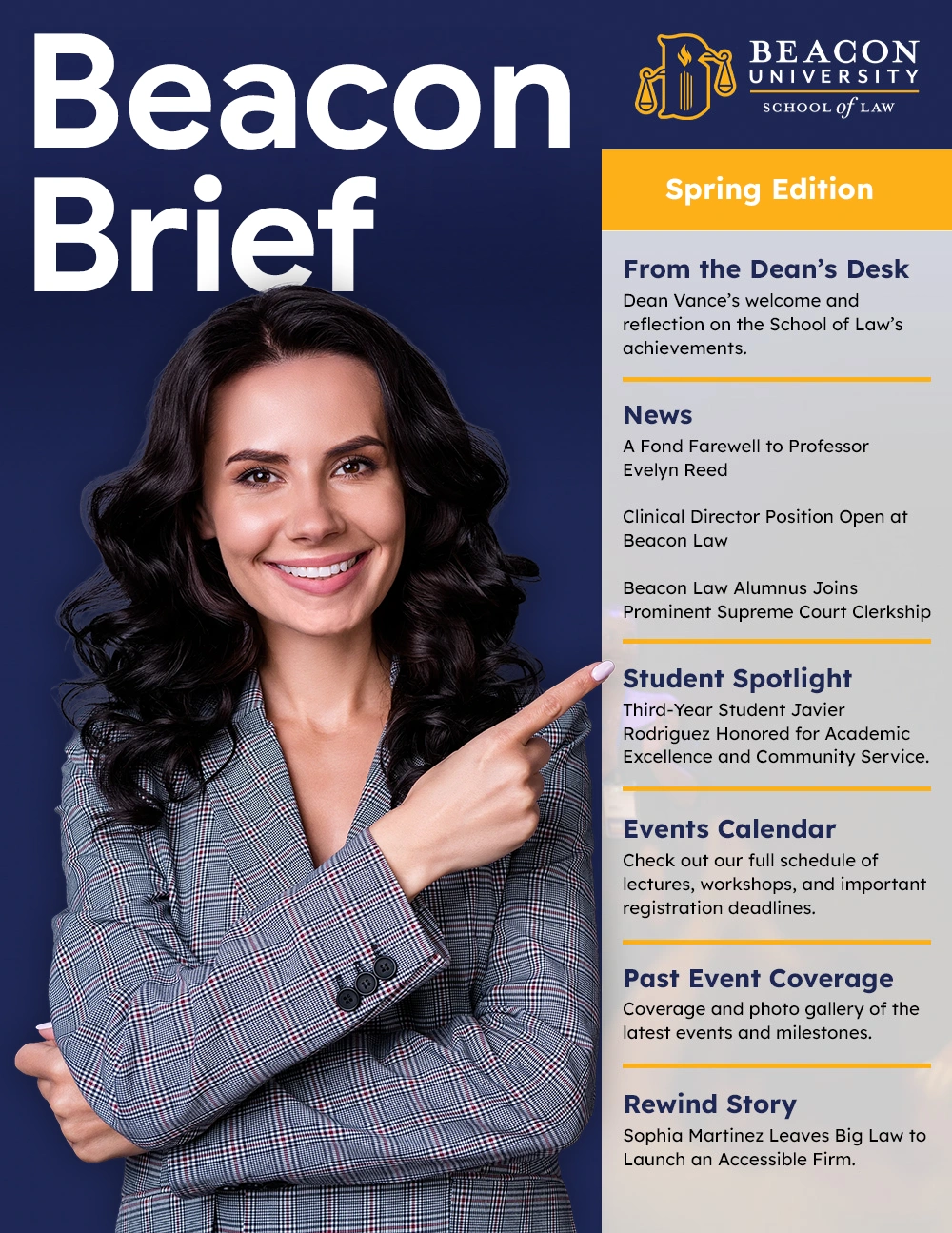
Spring Edition
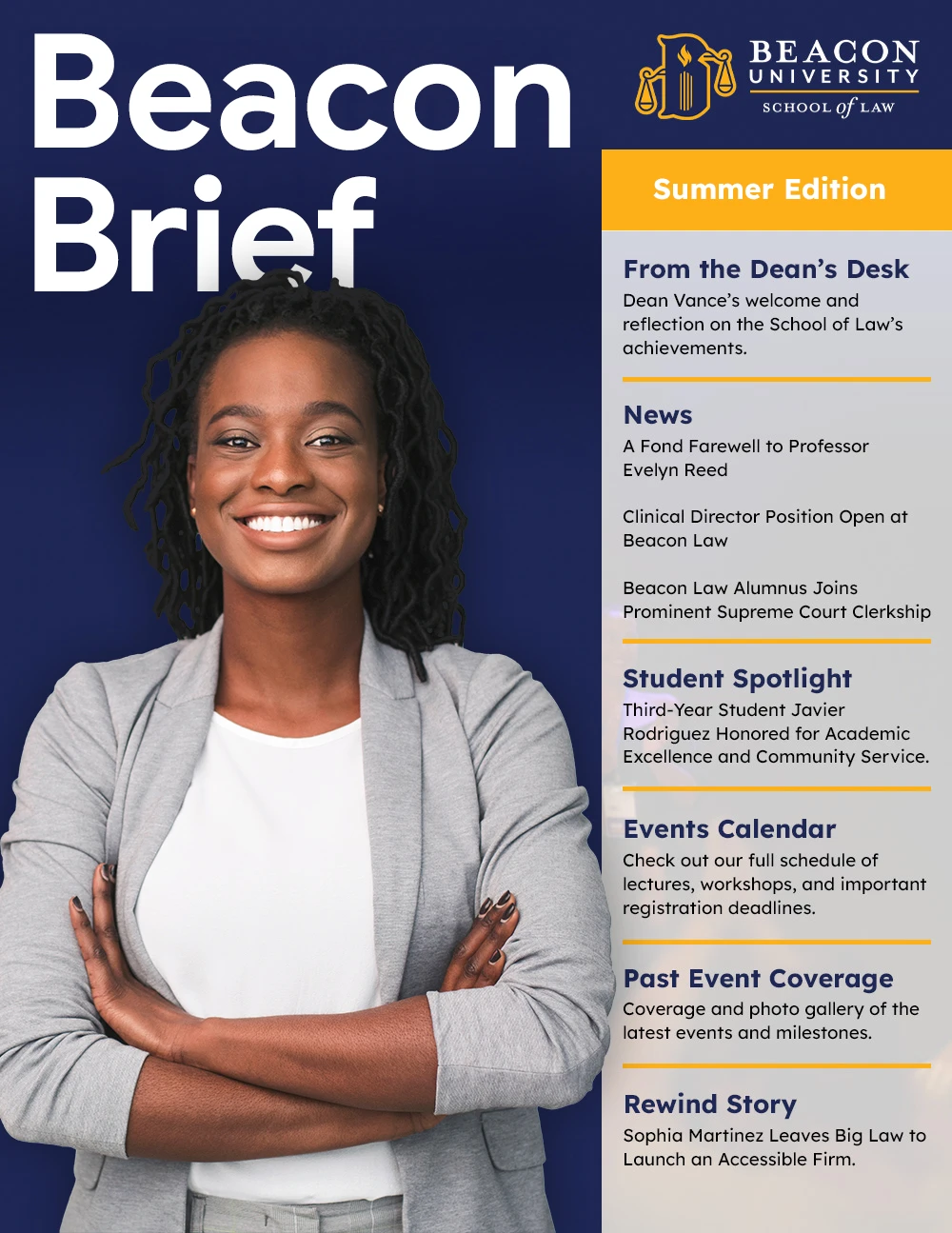
Summer Edition
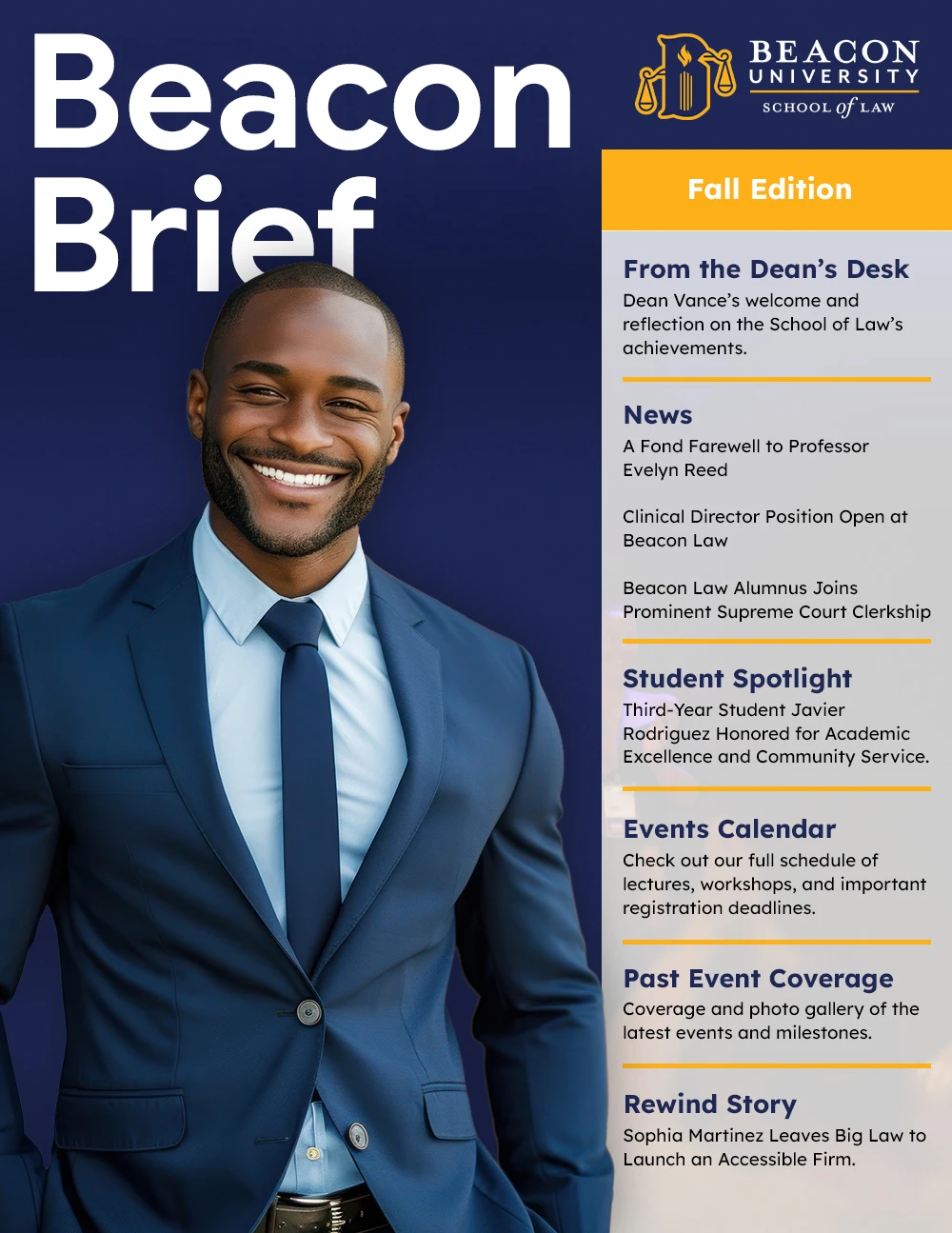
Fall Edition
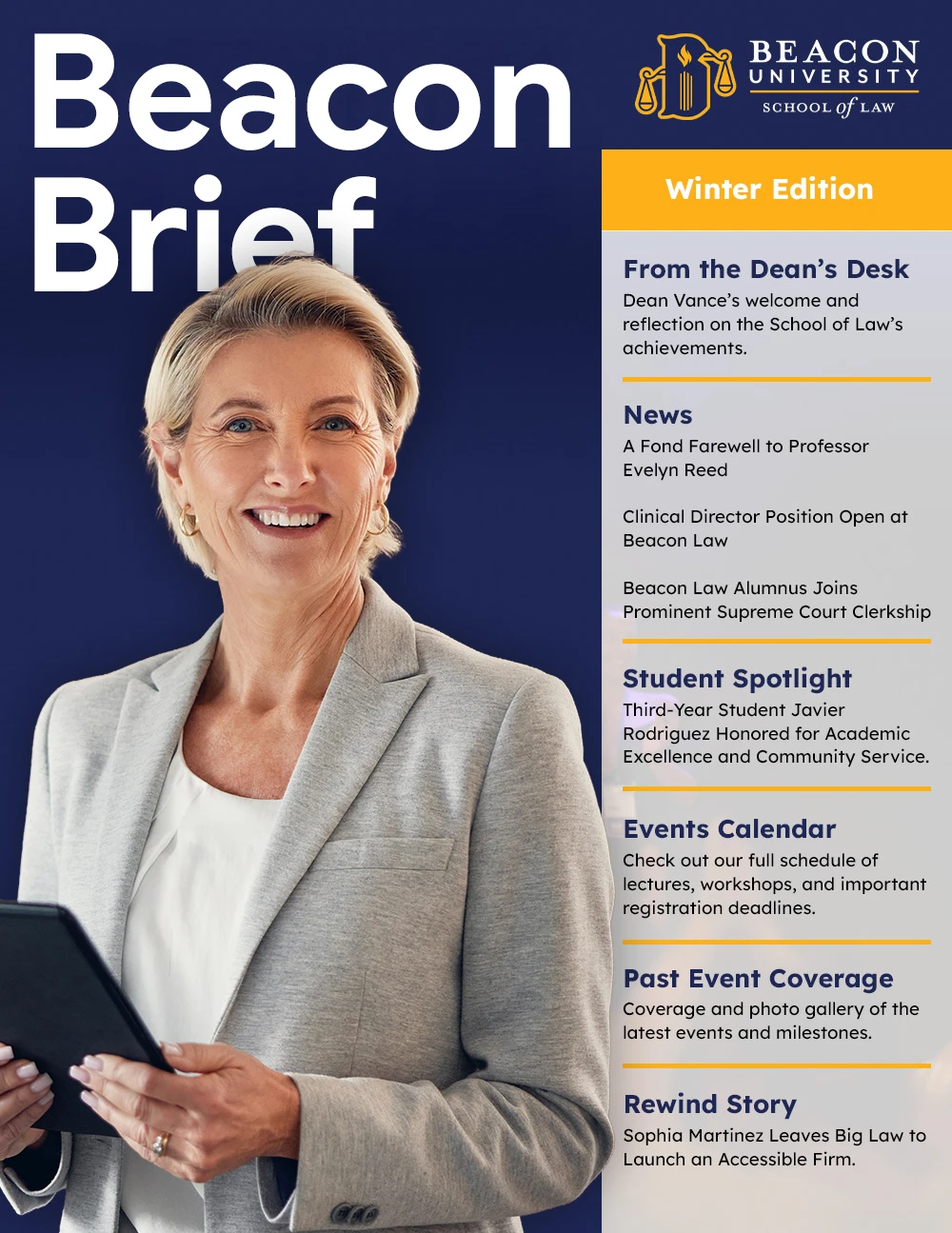
Winter Edition
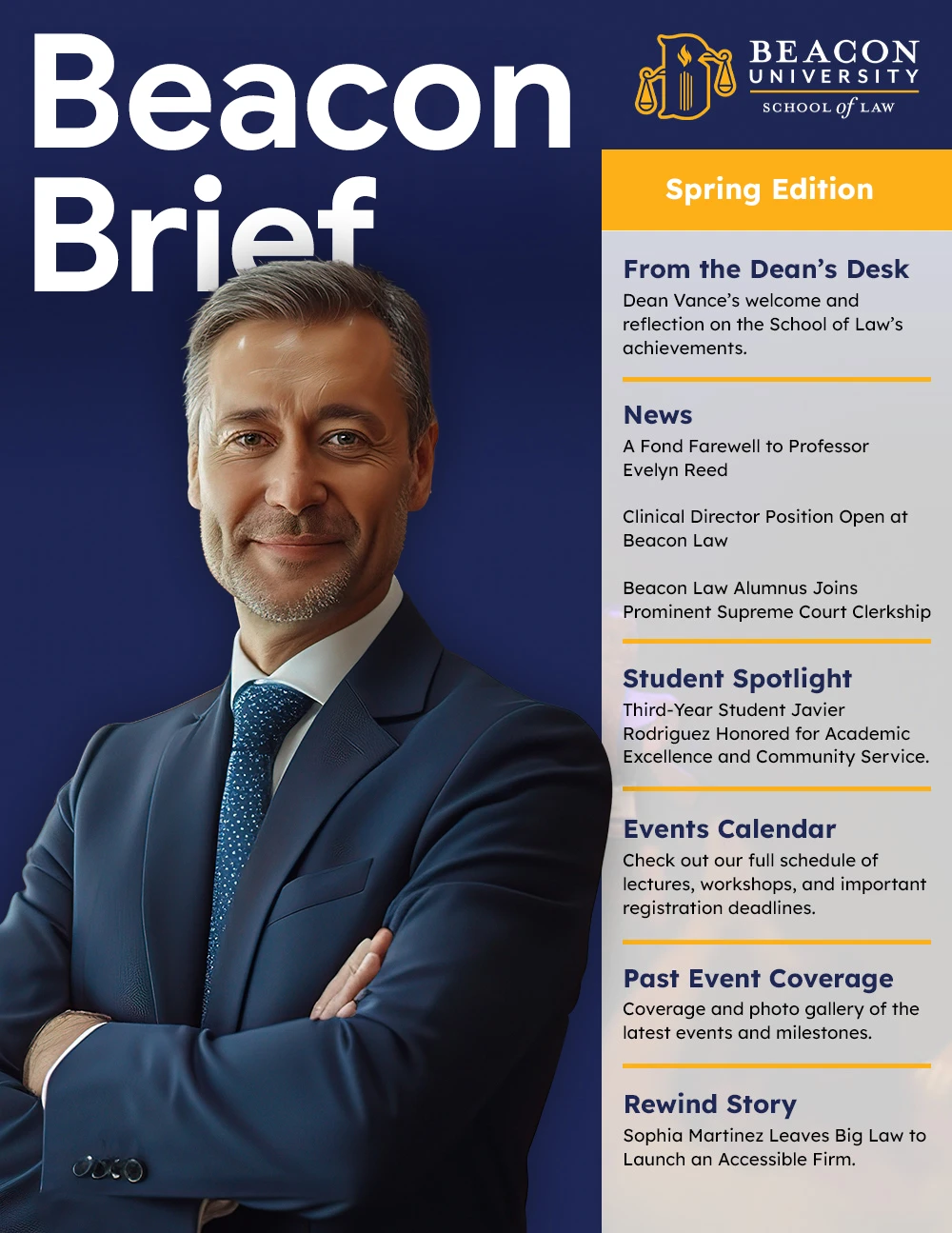
Spring Edition
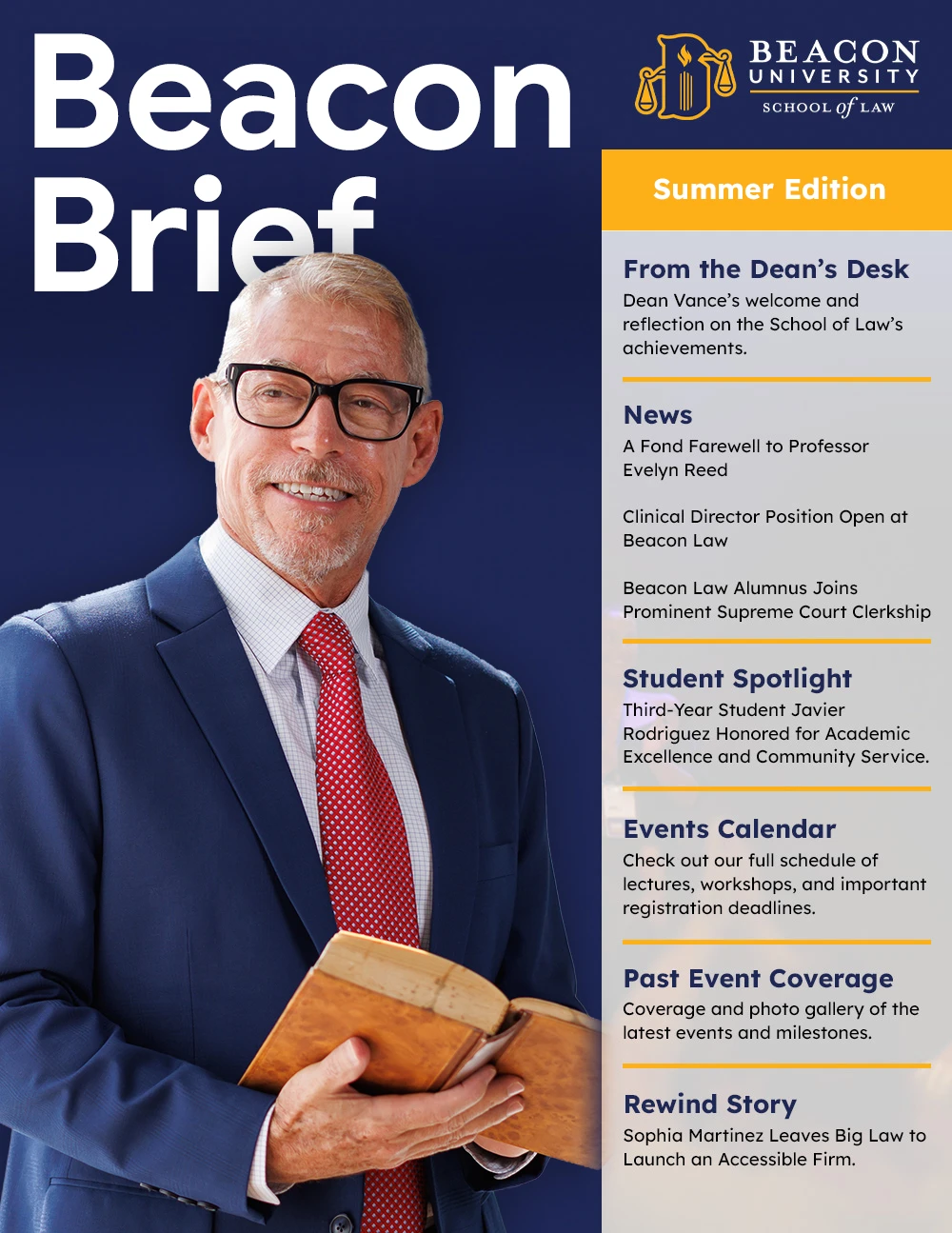
Summer Edition
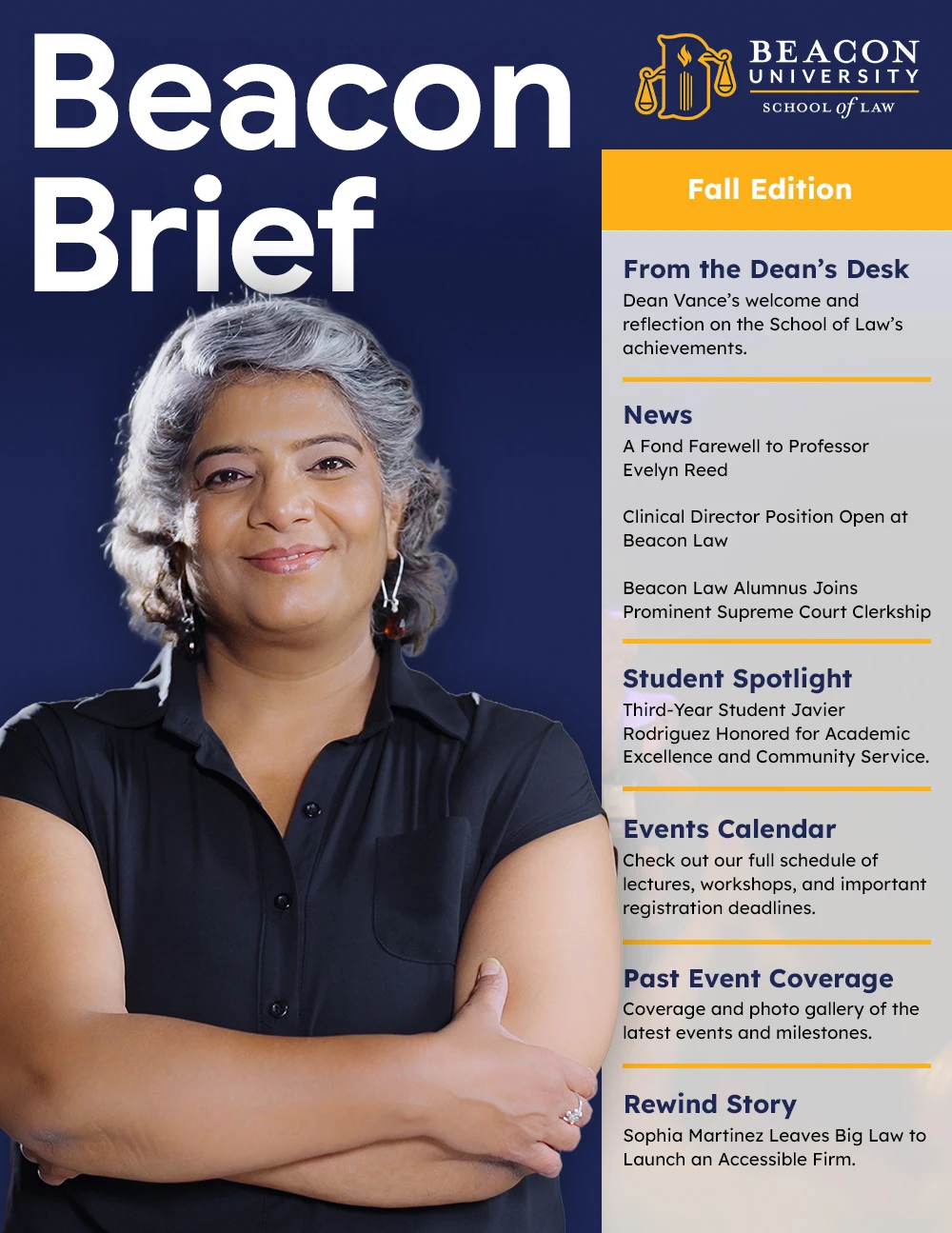
Fall Edition
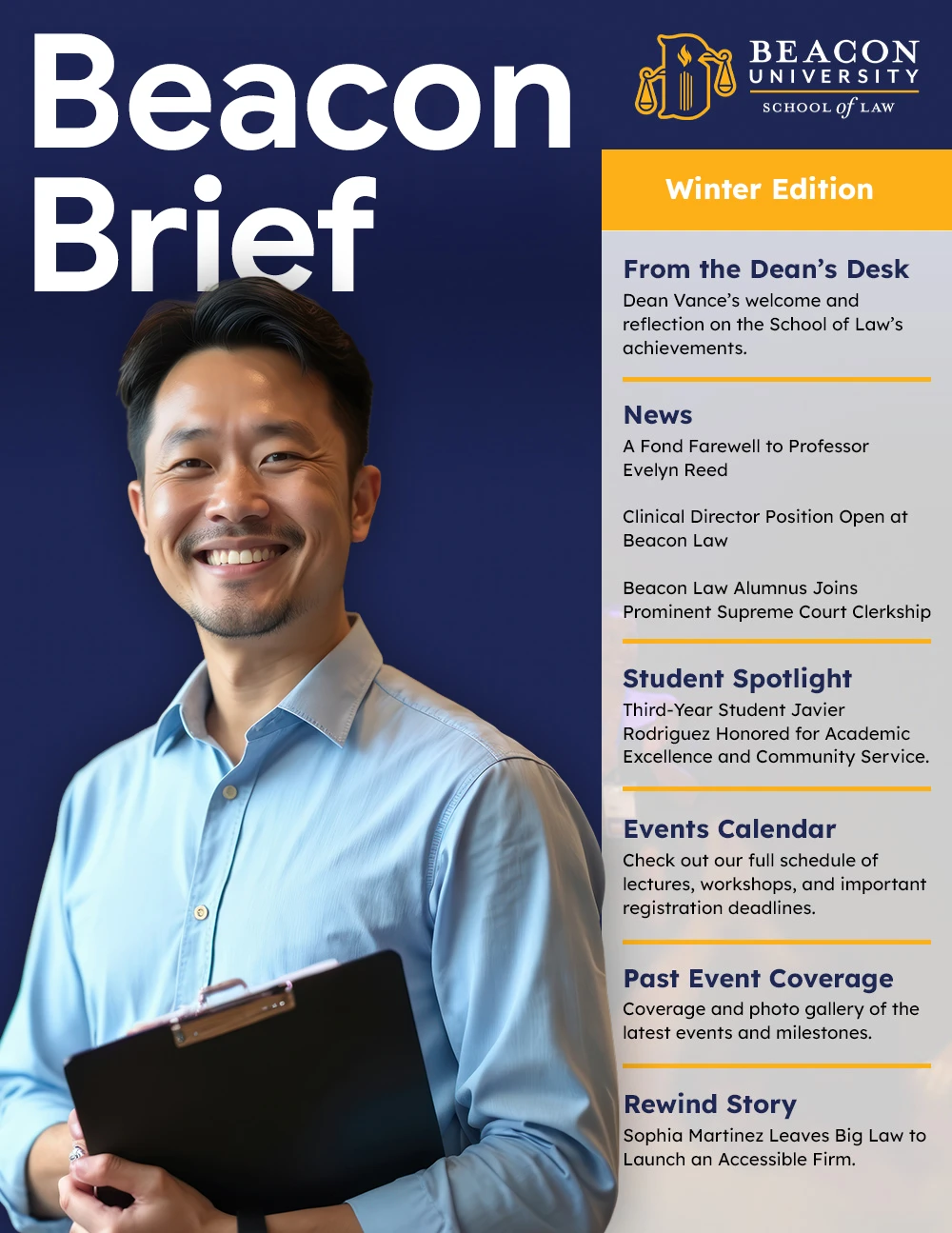
Winter Edition
Contact
700 Freedom Avenue
Middleborough, MA 02346
United States
Phone: (508) 555-1234
Fax: (508) 555-5678
Email: [email protected]
Admissions Office:
Phone: (508) 555-2345
Email: [email protected]
Alumni Relations:
Phone: (508) 555-6789
Email: [email protected]
Career Services:
Phone: (508) 555-7890
Email: [email protected]